
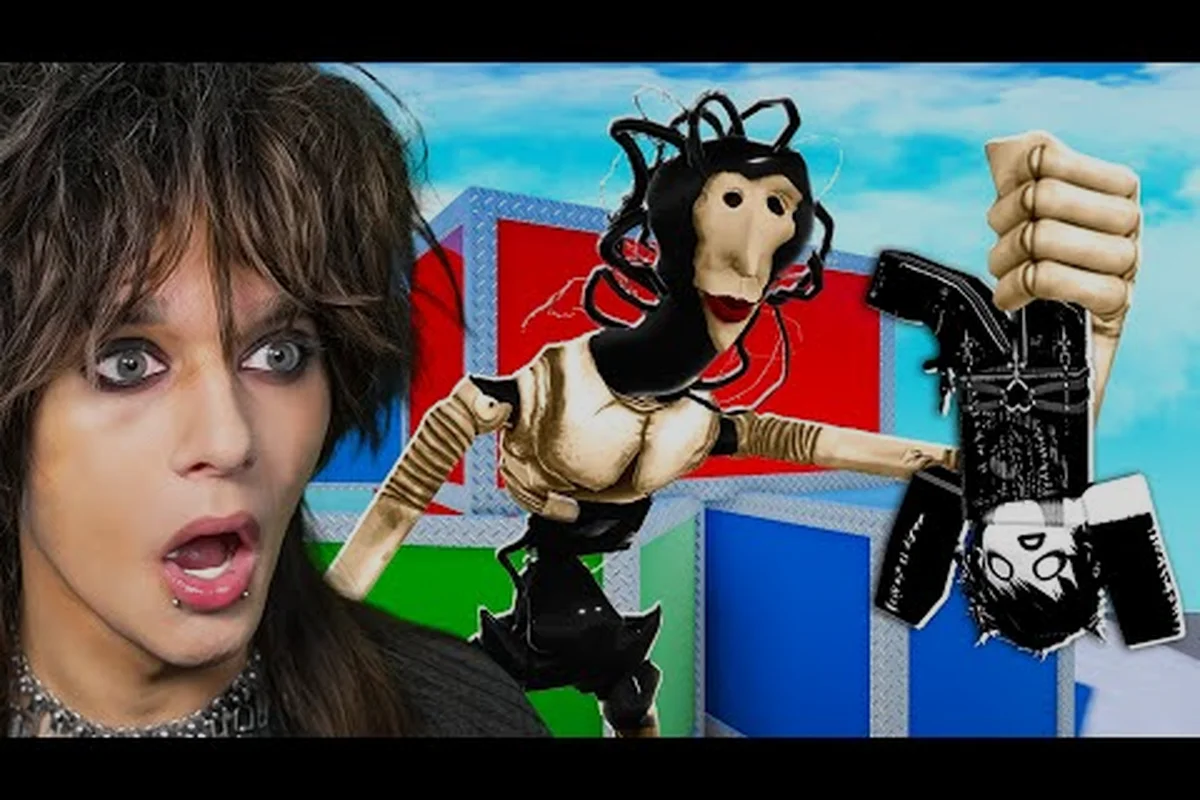
The Locust's nest is not just a hunting ground—it is a living monument to something ancient and hungry. When players first stumble into this Roblox horror survival experience created by THE STALKERS OG, they face an immediate question that haunts every survivor who manages to outlive the killer: what does it truly mean to escape? The MM2 of The Locust ending explained phenomenon has sparked intense community debate since the game's launch in late July 2026, with over 26 million visits and countless players desperate to understand the deeper narrative threading through the panic and pursuit. This guide peels back the layers of horror to reveal what the final escape really signifies, why The Locust hunts, and what secrets the nest conceals within its twisting corridors. Throughout these twisted corridors, developers have buried subtle lore Easter Eggs that reward attentive players with deeper insights into The Locust's origins.
The ending is triggered by a hidden “Locust Protocol” that, as documented on MM2 of The Locust on Roblox, activates only after all three relics are collected. The ending is triggered by a hidden "Locust Protocol" that, as documented on MM2 of The Locust on Roblox, activates only after all three relics are collected, making it one of the most rewarding hidden Easter eggs for dedicated players to uncover.
The Survivor Story: Why You Are Trapped in The Locust's Nest
Every round of MM2 of The Locust begins with the same unsettling premise: you have already lost. Players spawn inside The Locust's nest without any memory of how they arrived, disoriented and vulnerable in a space that feels deliberately designed to trap prey. The survivor story functions as a frame narrative, suggesting that everyone who enters this nightmare has been chosen—or perhaps harvested—for a purpose that extends beyond simple predation.
Community discussions on the game's lore point to environmental storytelling as the primary vehicle for this narrative. The nest is not random; it contains chambers that feel architectural, almost ritualistic, as though The Locust has been constructing this space for generations. Scattered throughout the maps are remnants of previous attempts to escape—broken tools, faded markings on walls, and the occasional glimpse of structures that suggest a community once existed here. The survivor you control is not the first to face The Locust, and the MM2 of The Locust lore wiki suggests you will not be the last unless the cycle can somehow be broken.
The deeper meaning embedded in this premise positions each match as both an immediate survival challenge and a larger meditation on cycles of violence. The Locust does not simply kill for sustenance; it maintains a territory, cultivates its nest, and systematically eliminates threats to its domain. This behavior transforms the horror from a straightforward chase into something more existential—survivors are trapped not just physically but narratively, caught in a story that predates their arrival and will continue long after they are gone.
The Locust: Monster, Predator, or Something More?
Understanding The Locust requires abandoning conventional horror archetypes. This is not a mindless beast chasing prey for sustenance alone, nor is it a supernatural entity bound by arbitrary rules. The Locust operates with a terrifying intentionality that suggests either extraordinary intelligence or an instinct so refined it mimics conscious strategy. Players who have studied the game's mechanics note that The Locust demonstrates preferential hunting behavior—it will often pursue specific survivors while ignoring others, switching targets mid-chase in ways that feel deliberate rather than random.
The MM2 of The Locust scary story aspect emerges from this unpredictability combined with the creature's physical capabilities. The Locust moves faster than any survivor can run, scales walls with disturbing ease, and appears to possess some form of spatial awareness that lets it cut off escape routes. Community experiments have shown that hiding in seemingly impossible locations sometimes works while obvious hiding spots result in swift discovery, leading theorists to speculate about sensory abilities beyond standard sight and sound.
What makes The Locust truly unsettling, however, is the implication that it learns. Each round offers the creature new information about how survivors behave, where they tend to hide, and which strategies prove most effective. The MM2 of The Locust similar games comparison often draws parallels to asymmetrical horror titles where the monster grows more dangerous as the match progresses, but the community consensus holds that The Locust represents something more persistent—a single entity that has been hunting for so long it has internalized every survival trick prey might attempt.
The Final Escape: What Does Victory Actually Mean?
| Milestone | Date | Details |
|---|---|---|
| Game Launch | 2026-07-27 | Initial release of MM2 of The Locust on Roblox |
| Last Update | 2026-08-31 | Latest version before pending video verification |
| Next Update | Planned | Game improvements, new maps, equipment powers |
| Server Data Refresh | 2026-08-31 | Metrics pulled from Roblox Games API (universeId: 10576739951) |
Reaching the escape point in MM2 of The Locust triggers a moment that has generated more community speculation than almost any other aspect of the game. When survivors locate and activate the escape mechanism, they are treated to a brief cutscene or visual cue indicating their successful extraction from the nest. But the celebration is invariably short-lived, and thoughtful players quickly notice several unsettling details about what this escape actually represents.
The MM2 of The Locust final escape appears to function as a reset rather than a true victory. Surviving players return to the lobby, their characters unmarked by the ordeal they just endured, ready to queue into another round of the same nightmare. This cyclical structure suggests one of two interpretations, both equally disturbing: either escape means nothing and The Locust simply rebuilds its collection of prisoners, or the escaped survivors remain somehow connected to the nest even after physical extraction. The game's pre-alpha status means developers may eventually reveal which interpretation aligns with the intended narrative, but current evidence points toward a deliberately ambiguous conclusion that rewards survival without affirming hope.
Player testimonies describe the escape feeling anticlimactic precisely because the environment barely changes. You leave the nest physically, but The Locust remains, and the nest itself persists unchanged. This design choice transforms the escape from a triumphant conclusion into a temporary reprieve, reinforcing the horror narrative's themes of entrapment and inevitability. The MM2 of The Locust escape ending guide emerging from community collaboration emphasizes practical extraction strategies while acknowledging that mechanical success and narrative resolution remain entirely separate matters.
The Nest's Architecture: What the Environment Reveals
Careful examination of MM2 of The Locust maps reveals an environment far more deliberate than typical horror game arenas. The nest is not a random collection of rooms and corridors; it displays organizational principles that suggest intentional construction over extended periods. Areas that serve no practical function for the chase—such as dead ends with strange markings or chambers containing objects that appear ceremonial—imply a creature capable of abstract thought and ritualistic behavior.
The MM2 of The Locust map lore discussion among community researchers has catalogued several recurring environmental features that hint at deeper meaning. Certain rooms contain what appear to be collections: objects gathered from previous survivors, arranged in patterns that could be decorative or organizational. Other spaces suggest different purposes—a hatching chamber where the air feels thicker, a feeding area marked by darker stains, and most disturbingly, a structure that resembles a nursery containing shapes too unsettling to examine closely. These environmental details accumulate into a picture of domesticity that transforms The Locust from monster to something uncomfortably close to parent.
The nest also displays evidence of expansion and adaptation. Newer sections feel distinguishable from older areas, with construction styles that vary in ways suggesting ongoing development. This architectural evolution supports the theory that The Locust maintains its territory with purpose, constantly improving facilities to serve functions that extend beyond simple shelter. Players studying the environment have noted that some areas appear designed specifically to confuse or misdirect survivors, implying foresight and planning that elevate The Locust's threat profile significantly.
Theories and Community Interpretations
| Metric | Value |
|---|---|
| Total Visits | 26,323,797+ |
| Total Favorites | 70,873 |
| Peak Concurrent Players | ~36,600 |
| Max Players Per Server | 30 |
| Game Genre | Survival / 1 vs All |
| Development Status | PRE-ALPHA |
| Developer Group | THE STALKERS OG (24,106+ members) |
The absence of explicit narrative exposition in MM2 of The Locust has created fertile ground for community theorizing, with players constructing elaborate interpretations that attempt to unify the game's disparate elements. Several distinct theoretical frameworks have emerged from forum discussions and video essays, each offering a different lens through which to understand the horror experience.
The cult hypothesis suggests that The Locust was once human—or perhaps human-adjacent—and has evolved or transformed into its current form through some process that the nest embodies. According to this interpretation, the ritualistic elements scattered throughout the environment represent attempts to communicate or appease an entity that has transcended normal biological limits. The MM2 of The Locust deeper meaning in this framework concerns humanity's relationship with forces beyond comprehension, and the desperate attempts to create meaning in the face of incomprehensible threat.
The specimen collection theory takes a more clinical approach, positioning The Locust as an apex predator that maintains its nest as a curated hunting ground. This interpretation emphasizes The Locust's apparent selectivity in choosing prey, the organized nature of the environment, and the cyclical structure that brings new survivors into the space repeatedly. Escape, under this framework, represents successful navigation of a test rather than genuine freedom—the specimen that proves worthy of release while others remain trapped indefinitely.
The simulation or trap theory proposes that escape itself represents the true danger, suggesting that The Locust deliberately releases certain survivors to spread awareness of the nest and attract new prey. This darker interpretation casts every successful escape as part of The Locust's long-term strategy, with the creature cultivating its reputation through the very players who believe they have defeated it. Community debates continue to rage about which interpretation best fits the evidence, with new observations regularly emerging to support or complicate existing theories.
The Horror Design Philosophy Behind MM2 of The Locust
Understanding why MM2 of The Locust achieves its frightening effect requires examining the deliberate design choices that distinguish it from other Roblox horror offerings. The game's approach to tension combines mechanical simplicity with environmental complexity, creating a loop that rewards both skilled play and careful observation. Players who master the basic mechanics of hiding and running discover that survival alone does not diminish the horror—it intensifies it, because success reveals how much more there is to understand.
The MM2 of The Locust similar games comparison inevitably leads to titles like Dead by Daylight and Phasmophobia, but the community recognizes significant differences in execution. Where those games provide explicit rules and feedback systems, MM2 of The Locust maintains deliberate opacity about The Locust's capabilities and behavior patterns. This uncertainty generates anxiety that pure mechanical challenge cannot achieve, because players can never be certain whether their strategy is working or whether The Locust is simply allowing them to survive for reasons of its own.
The atmospheric design contributes substantially to the experience, with lighting, sound design, and environmental detail combining to create a space that feels genuinely threatening. Community members who have analyzed the audio carefully note that the nest produces sounds that seem impossible given the environment's apparent layout—suggesting either deliberate misdirection through sound design or evidence of spaces that exist beyond the visible play area. The MM2 of The Locust scary story quality emerges from this accumulation of small unsettling details rather than any single overwhelming horror moment.
How MM2 of The Locust Compares in Horror
| Feature | MM2 of The Locust | Typical Roblox Horror Games |
|---|---|---|
| Monster Intelligence | Learns across rounds, demonstrates selective hunting | Usually scripted patrol patterns |
| Environmental Storytelling | Extensive lore hints in architecture and objects | Minimal, mostly jump scare focused |
| Escape Significance | Ambiguous, possibly cyclical | Typically represents clear victory |
| Community Lore Development | Active speculation and theory development | Rare, usually absent |
| Nest Design | Purposeful, suggests ritual behavior | Random generation, functional only |
The comparison table illustrates why MM2 of The Locust has attracted such dedicated attention from players interested in narrative and atmosphere rather than pure mechanical challenge. The game's willingness to leave questions unanswered creates space for community engagement that purely mechanical horror experiences cannot sustain. Players return not just to improve their survival skills but to investigate theories and test interpretations against new evidence.
The developers' decision to maintain the pre-alpha designation while delivering such a polished core experience suggests a development philosophy prioritizing atmosphere and mechanics over content quantity. The MM2 of The Locust lore wiki entries that have emerged from community effort demonstrate how players have begun organizing the scattered evidence into coherent frameworks, effectively collaborating to create the narrative documentation that the developers have deliberately withheld.
Frequently Asked Questions
What does escaping the nest actually mean for the survivor character?
Escaping provides mechanical victory—your player successfully exits the current round—but the narrative implications remain deliberately unclear. The survivor returns to the lobby unchanged, suggesting either that the escape is permanent or that the cycle simply resets. Community theories range from true freedom to elaborate trap, with insufficient evidence to confirm any single interpretation. The game's pre-alpha status means future updates may clarify this ambiguity.
Is The Locust a single entity or multiple creatures?
Current evidence strongly suggests a single Locust that persists across rounds, accumulating experience and adapting its behavior based on previous hunts. This interpretation explains the creature's apparent intelligence and selective hunting patterns. However, the possibility of multiple Locusts operating simultaneously cannot be entirely ruled out based on available information.
Why does The Locust keep survivors trapped in its nest?
The purpose behind The Locust's behavior remains one of the game's greatest mysteries. Theories range from feeding and territory maintenance to ritualistic or specimen-collection purposes. The organized nature of the nest and the presence of areas that serve no practical hunting function suggest motivations beyond simple predation, but the specific meaning remains unconfirmed.
Are there hidden story elements players might be missing?
Absolutely. The environmental storytelling in MM2 of The Locust rewards careful observation, with details that only become apparent after multiple playthroughs. Examining areas away from the escape route, paying attention to object placements, and comparing different maps for consistent lore elements all reveal additional context. Community members continue discovering new details that reshape existing theories.
Will future updates clarify the ending and lore?
Given the pre-alpha designation, significant narrative development is expected in future updates. The developers have indicated plans for new maps, equipment powers, and game improvements, suggesting the story framework exists even if it has not yet been fully implemented. Community members recommend monitoring official channels for lore revelations as the game progresses toward full release.